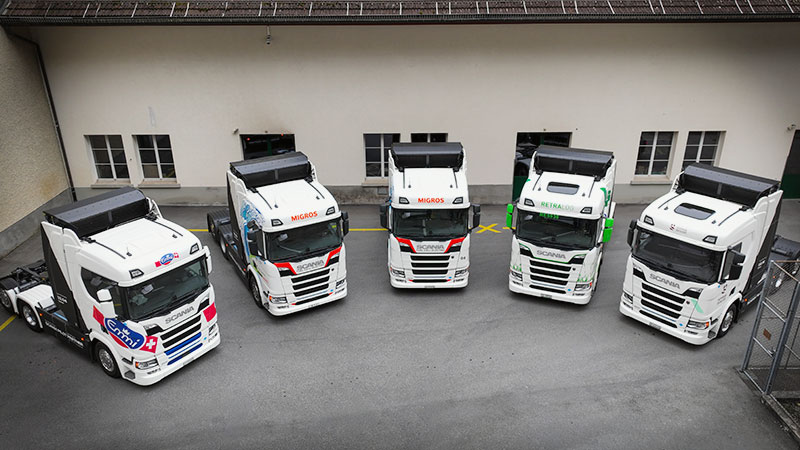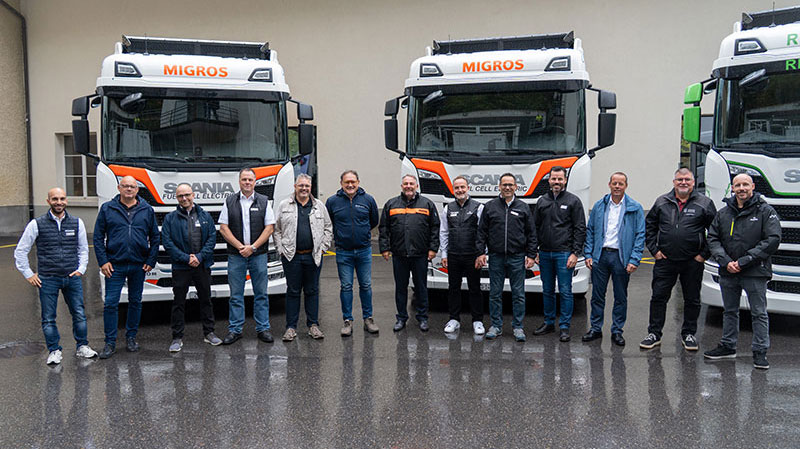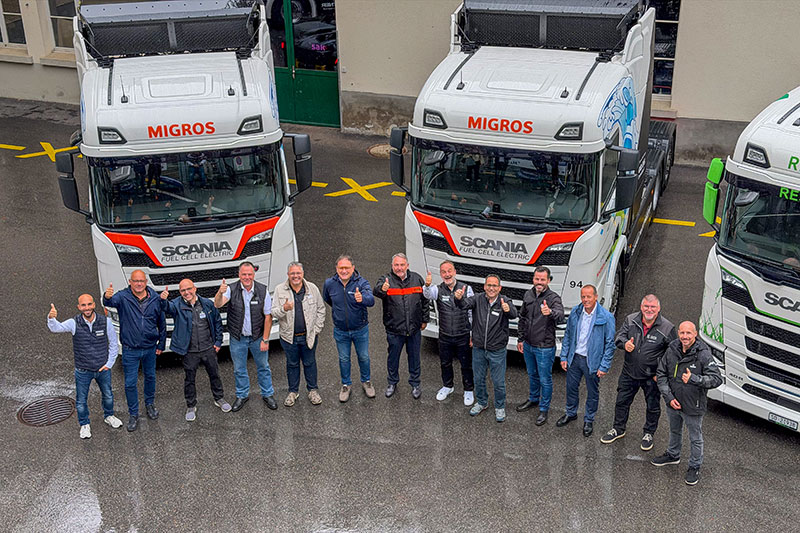
Five Scania hydrogen trucks enter operational service in Switzerland
Four Swiss companies are testing fuel cell technology in real-world transport operations.
On Thursday, 8 October 2026, Scania Swit

The first two IVECO S-eWay H2 trucks on Swiss roads
As reported by G.Leclerc Transport AG, the association member took delivery of its two IVECO H2 trucks at the end of May:
"With th

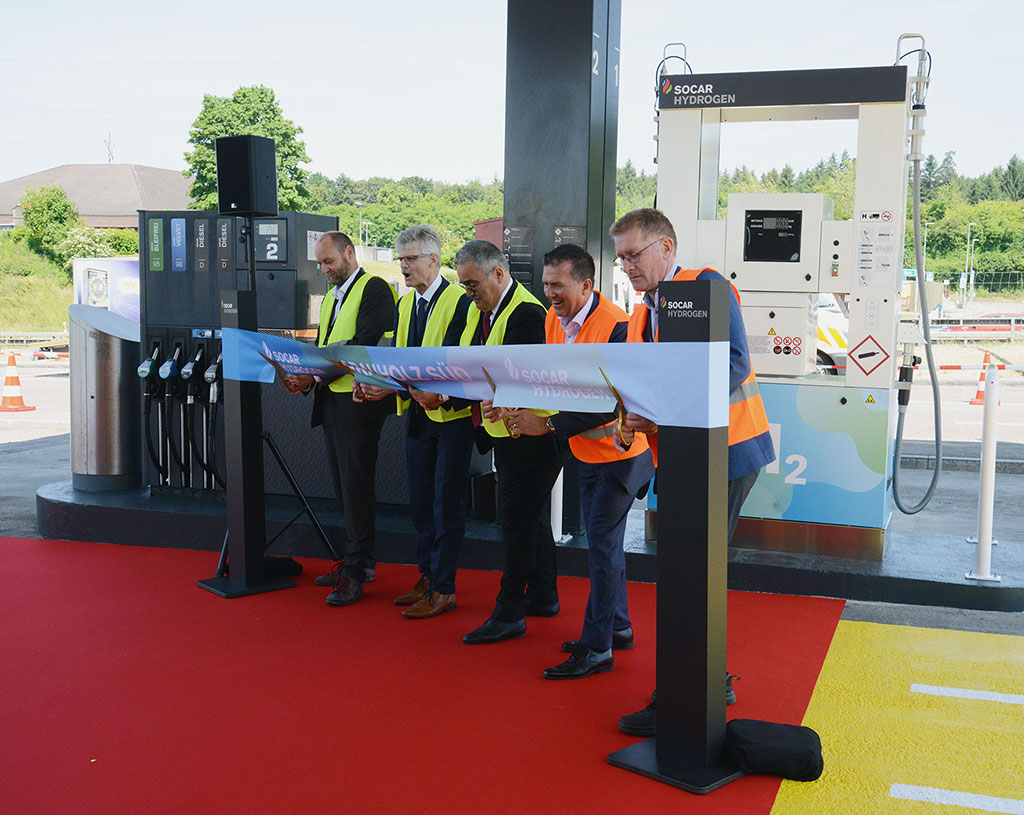
SOCAR OPENS FIRST HYDROGEN FILLING STATION ON SWISS MOTORWAY
The Grauholz motorway service station outside Bern was the scene of the opening ceremony of SOCAR’s first hydrogen filling station.
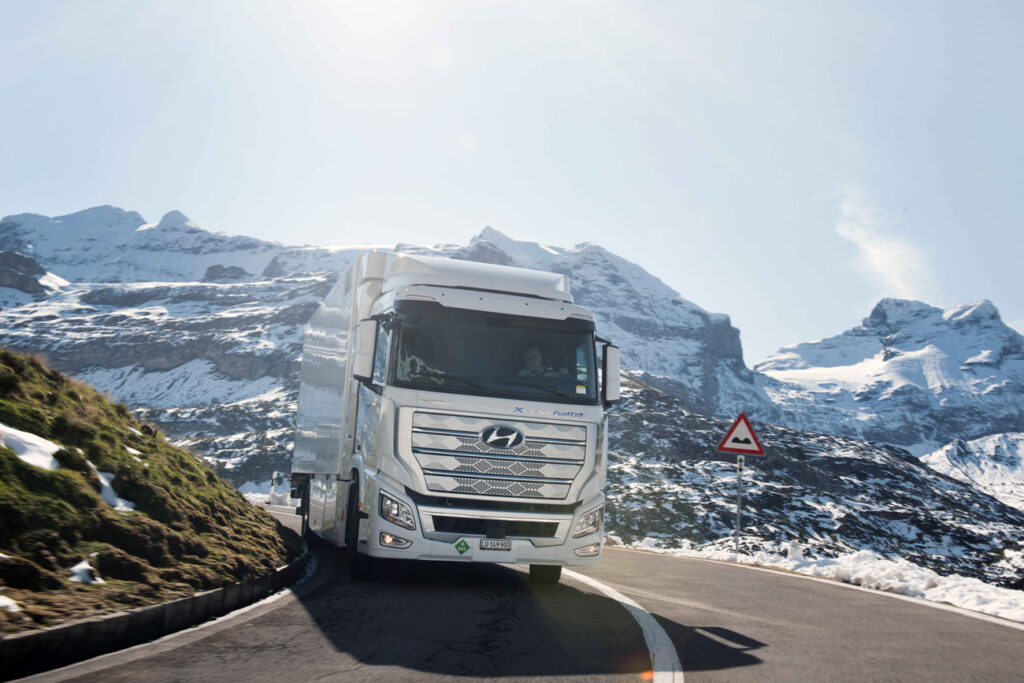
Statement concerning HYUNDAI hydrogen mobility business case in Switzerland
The recent Switzerland media reports about Hyundai and its partners might discontinue its initiatives for hydrogen ecosystem are to

On the road together: 20 hydrogen electric trucks drive the 5 millionth kilometer together
While the world of mobility is preparing for a new era – with a focus on electric propulsion – a globally unique realization of an

Hyundai Motor’s XCIENT Fuel Cell Heavy-Duty Trucks to Hit German Roads
Seven German companies in logistics, manufacturing and retail to put 27 XCIENT
Fuel Cell heavy-duty trucks into fleet service w
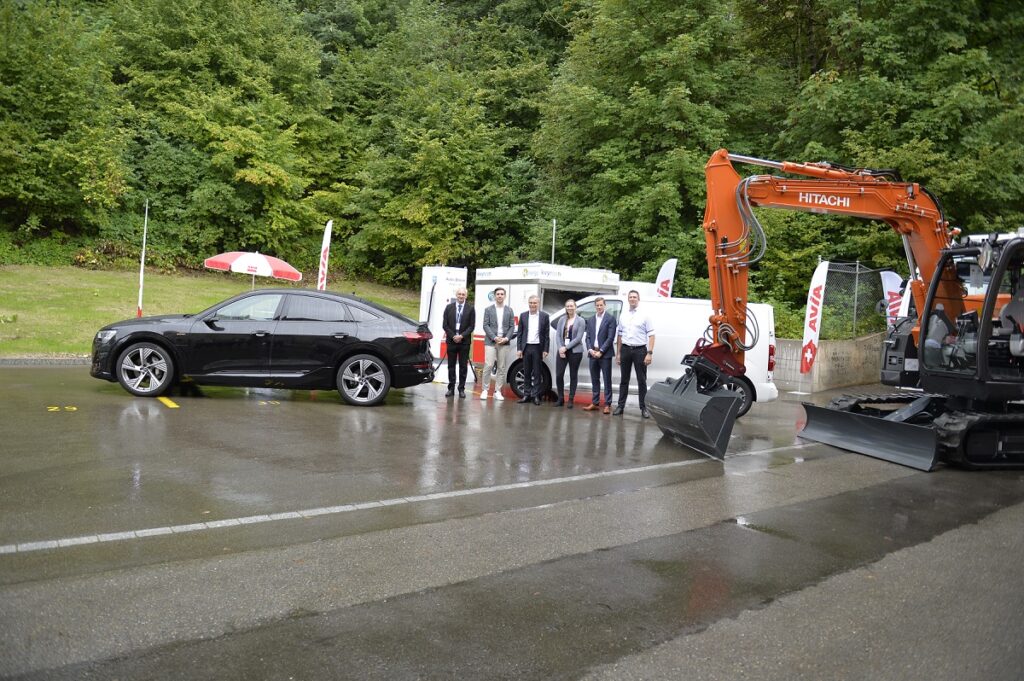
kvyreen – rapid electric charging with green hydrogen, anywhere and anytime
A globally unique H2 ecosystem is currently being created in Switzerland that uses green hydrogen in electromobility. While this en

Hydrogen ecosystem for emission-free mobility wins Watt d’Or 2021
Great honour for H2 Energy, Hyundai Hydrogen Mobility, Hydrospider and the H2 Mobility Switzerland Association: The hydrogen ecosys
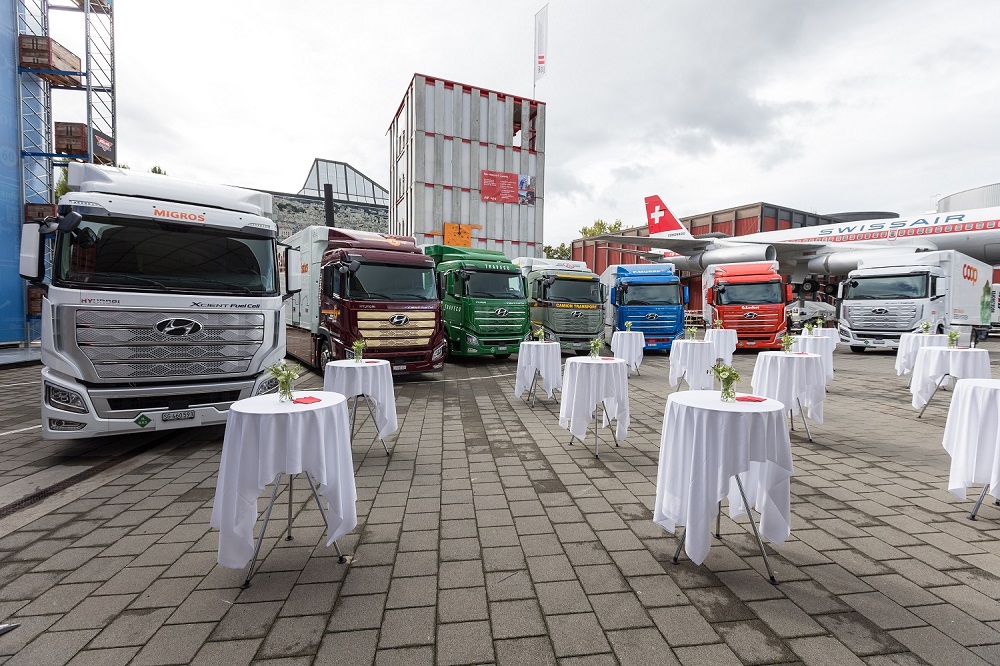
Swiss companies write mobility history
A great day for Lucerne, for Switzerland, for the world and for mobility! Hyundai Hydrogen Mobility Ltd is delivering the very firs
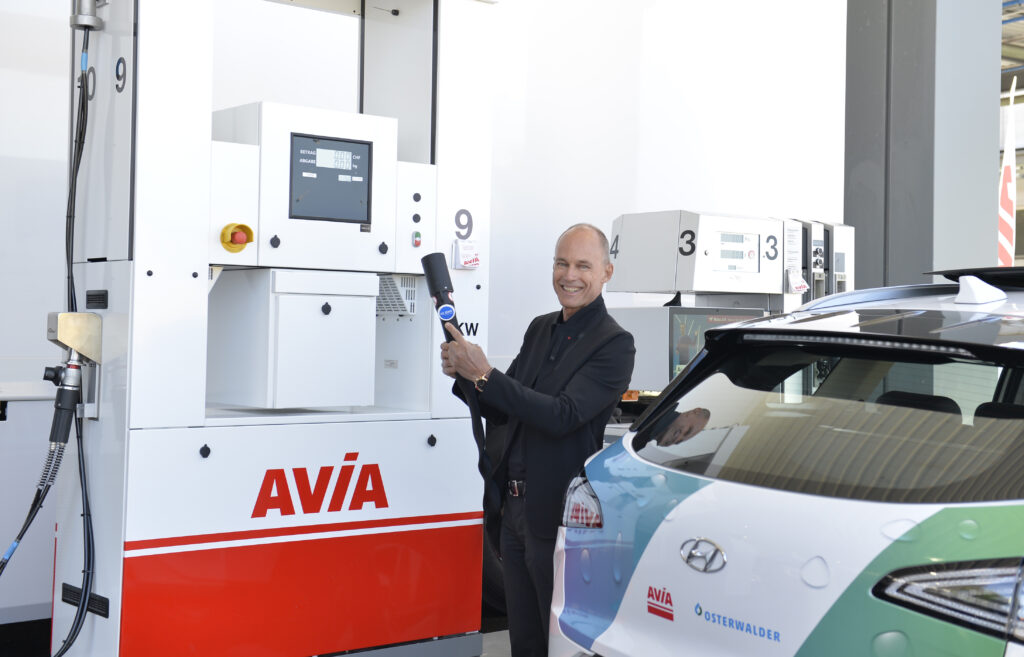
Bertrand Piccard launches hydrogen-electric mobility in Switzerland
World’s first AVIA hydrogen filling station opens in St. Gallen
Six hydrogen filling stations to cover the route between Lake Co

Hydrogen-electric mobility in Switzerland – ready to go!
Hydrogen-electric mobility in Switzerland is entering the next phase. The pilot phase will this year be followed by the industrial

Thanks to green hydrogen, the link between the electricity and mobility sectors is becoming an economic reality in Switzerland
The first 2 MW electrolysis facility for the production of green hydrogen in Switzerland will become operational at the Gösgen h
Hydrogen-electric mobility in Switzerland on the verge of a breakthrough
Four new members join the H2 Mobility Switzerland Association: Camion Transport Ltd., G. Leclerc Transport AG, F. Murpf AG and

Hyundai Motor and H2 Energy Sign Joint Venture Contract to spearhead Hydrogen Mobility in Europe
Hyundai and H2 Energy to establish ‘Hyundai Hydrogen Mobility’ to tap into Europe’s hydrogen mobility ecosystem with fuel cell tr

Galliker Transport & Logistics becomes the eleventh member of the H2 Mobility Switzerland Association
Introduction of hydrogen-electric mobility in Switzerland picks up speed
Only 10 months after founding, the H2 Mobility Switzerlan

Emil Frey Group and Shell are committing to hydrogen mobility
The H2 Mobility Switzerland Association, founded in May this year, is growing rapidly. The eight Swiss companies that founded or ha

The Association pro H2 mobility Switzerland is growing
SOCAR Energy Switzerland promotes hydrogen mobility The Association pro H2 mobility Switzerland is growing
Not long after its foun
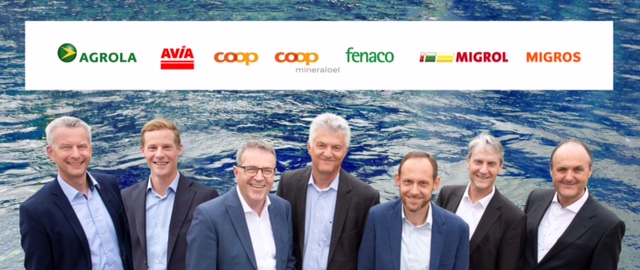
Major Swiss companies push hydrogen mobility
Agrola AG, AVIA Association, Coop, Coop Mineraloel AG, the fenaco Cooperative, Migrol AG and the Federation of Migros Cooperatives
Emil Frey Group and Shell are committing to hydrogen mobility
The H2 Mobility Switzerland Association, founded in May this year, is growing rapidly. The eight Swiss companies that founded or have since become members of the association are now joined by two heav
The Association pro H2 mobility Switzerland is growing
SOCAR Energy Switzerland promotes hydrogen mobility The Association pro H2 mobility Switzerland is growing
Not long after its founding in May this year, the Association pro H2 mobility Switzerland ha
Major Swiss companies push hydrogen mobility
Agrola AG, AVIA Association, Coop, Coop Mineraloel AG, the fenaco Cooperative, Migrol AG and the Federation of Migros Cooperatives are establishing an association with the goal to jointly develop a na
Hydrogen-electric mobility in Switzerland – ready to go!
Hydrogen-electric mobility in Switzerland is entering the next phase. The pilot phase will this year be followed by the industrial implementation of the entire CO2-free hydrogen circuit. One of the fo
Thanks to green hydrogen, the link between the electricity and mobility sectors is becoming an economic reality in Switzerland
The first 2 MW electrolysis facility for the production of green hydrogen in Switzerland will become operational at the Gösgen hydropower plant at the end of 2019.
Together with petrol station ope
Hydrogen-electric mobility in Switzerland on the verge of a breakthrough
Four new members join the H2 Mobility Switzerland Association: Camion Transport Ltd., G. Leclerc Transport AG, F. Murpf AG and Tamoil Ltd.
Promising results after the first year of existence of
Hyundai Motor and H2 Energy Sign Joint Venture Contract to spearhead Hydrogen Mobility in Europe
Hyundai and H2 Energy to establish ‘Hyundai Hydrogen Mobility’ to tap into Europe’s hydrogen mobility ecosystem with fuel cell trucks
Hyundai to deliver 1,600 fuel cell heavy-duty trucks to the JV
Galliker Transport & Logistics becomes the eleventh member of the H2 Mobility Switzerland Association
Introduction of hydrogen-electric mobility in Switzerland picks up speed
Only 10 months after founding, the H2 Mobility Switzerland Association announces the next new member. With Galliker Transport
Swiss companies write mobility history
A great day for Lucerne, for Switzerland, for the world and for mobility! Hyundai Hydrogen Mobility Ltd is delivering the very first volume-production hydrogen-electric commercial vehicles (36 t) to s
Bertrand Piccard launches hydrogen-electric mobility in Switzerland
World’s first AVIA hydrogen filling station opens in St. Gallen
Six hydrogen filling stations to cover the route between Lake Constance and Lake Geneva by the end of 2020
Mass production of green
kvyreen – rapid electric charging with green hydrogen, anywhere and anytime
A globally unique H2 ecosystem is currently being created in Switzerland that uses green hydrogen in electromobility. While this environmentally friendly cycle is being developed and expanded further,
Hydrogen ecosystem for emission-free mobility wins Watt d’Or 2021
Great honour for H2 Energy, Hyundai Hydrogen Mobility, Hydrospider and the H2 Mobility Switzerland Association: The hydrogen ecosystem for emission-free mobility launched by these partners receives th
Statement concerning HYUNDAI hydrogen mobility business case in Switzerland
The recent Switzerland media reports about Hyundai and its partners might discontinue its initiatives for hydrogen ecosystem are totally groundless.
Hyundai Hydrogen Mobility will further execute and
On the road together: 20 hydrogen electric trucks drive the 5 millionth kilometer together
While the world of mobility is preparing for a new era – with a focus on electric propulsion – a globally unique realization of an initiative that relies on a cross-sector hydrogen eco-cycle has been
Hyundai Motor’s XCIENT Fuel Cell Heavy-Duty Trucks to Hit German Roads
Seven German companies in logistics, manufacturing and retail to put 27 XCIENT
Fuel Cell heavy-duty trucks into fleet service with government-backed funding
The funding program promotes the use o
SOCAR OPENS FIRST HYDROGEN FILLING STATION ON SWISS MOTORWAY
The Grauholz motorway service station outside Bern was the scene of the opening ceremony of SOCAR’s first hydrogen filling station. This means that there are now a total of 15 hydrogen filling station
The first two IVECO S-eWay H2 trucks on Swiss roads
As reported by G.Leclerc Transport AG, the association member took delivery of its two IVECO H2 trucks at the end of May:
"With the integration of two IVECO H2 40-tonne trucks with fuel cell technolo
Five Scania hydrogen trucks enter operational service in Switzerland
Four Swiss companies are testing fuel cell technology in real-world transport operations.
On Thursday, 8 October 2026, Scania Switzerland AG handed over five hydrogen fuel cell trucks to four Swiss c